For Health Information Week our local libraries have five Reading Well Collections freely available to borrow in printed form and from the digital library.
Reading Well supports people to understand and manage their health and wellbeing using helpful reading. The books are all chosen and recommended by health experts, as well as by people living with the conditions and topics covered, and their relatives and carers. Reading Well for mental health Browse the digital leaflet here and find out more about the titles here. Reading Well for young people (Shelf Help) Browse the digital leaflet here and find out more about the titles here. Reading Well for children Browse the digital leaflet here and find out more about the titles here. Reading Well for long term conditions The booklist covers general advice and information about living with a long term condition, common symptoms and titles focused on specific conditions such as arthritis, bowel conditions, diabetes, heart disease and stroke. Browse the digital leaflet here and find out more about the titles here. Reading Well for dementia Including fiction, memoir and photographic books used in reminiscence therapy. Browse the digital leaflet here and find out more about the titles here.
24 July, 10am – 4pm in the grounds of Knaresborough House
The Mayor of Knaresborough and Knaresborough Connectors invite you to a free community event with a chance to have fun and catch up with Chain Lane Community Hub, Inspire Youth, Knaresborough Rotary Club, Orb Arts and many more.
Music, entertainment, food and drink, family friendly activities.
The Jo Cox Foundation and the Connection Coalition have partnered with WhatsApp on a new Loneliness Advice chatbot messaging service, which gives people experiencing loneliness easy and secure access to advice, support and information.
The WhatsApp messaging chatbot is simple to use. Just add 07902 922 908 to your WhatsApp contacts, and then send a message saying ‘hi’ to bring up a menu featuring information and resources from organisations including Marmalade Trust, the Campaign to End Loneliness, Age UK, The Mix, The British Red Cross and the #LetsTalkLoneliness campaign.
A reminder that you are no longer be able to collect home testing kits from the test centres. PCR tests are by appointment only. You can still order home tests online or collect them from most pharmacies across North Yorkshire.
The mobile testing site at West Park Car Park in Harrogate is open from 9am to 4pm. Other mobile sites in North Yorkshire, including Ripon, are open 9am – 3pm. You can check the days they are open here.
Harrogate Borough Council are working with City of York Council and Better Homes Yorkshire to offer free cavity wall insulation and loft insulation. Funding has been obtained for the Home Upgrade Grant from the government’s Local Authority Delivery scheme.
To find out more or to register your interest call 01904 552300 or email betterhomes@york.gov.uk. They look forward to hearing from you.
Due to the impact of Coronavirus over 5.5 million people are claiming Universal Credit. Many of them are new to claiming Universal Credit having been negatively impacted by Coronavirus.
The following guide is designed to help local people navigate claiming Universal Credit.
The site gives ideas to help when preparing for an interview, a visit to an assessment centre or aptitude tests. It gives an opportunity to read expert advice and speak to other candidates. Good luck if this is helpful to you.
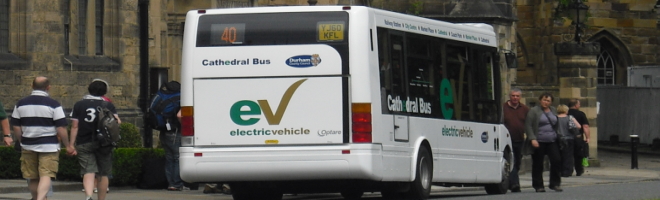
The Telegraph reports that the company behind the “Boris bus” is using French batteries to bring environmentally friendly services to rural routes, after previously pledging to champion British manufacturing
Wrightbus has unveiled its first electric-powered vehicle with a 200-mile range, which can be charged in under three hours, despite the fact that last year the company warned electric vehicles increase the UK’s dependency on China, where most of the world’s batteries are made.
The report outlines how bus manufacturers and operators are hopeful the industry is on the cusp of a golden age after Boris Johnson pledged billions of pounds in investment.
Enhancing bus services is a key plank of government plans to avoid a car-led recovery as the country emerges from the pandemic.
Full article:
The Daily Telegraph, print, Oliver Gill, 30 June 2021, page three
The Rural Services Network has concerns over the viability of electric buses in rural areas, as to cover an average rural route, it is likely that a range of 300 miles is required. This has implications for the number of buses required to cover a rural route if they cannot reach this level.
Introducing buses using electric battery or hydrogen fuel cell technologies involves significant investment, both in new vehicles and depot fuelling facilities. This may be hard to justify commercially in rural areas unless bus service patronage grows. The Government’s ZEBRA funding scheme should specifically target some uncommercial rural areas. Current electric buses also have a limited range that will be inadequate for some rural routes. A comprehensive review is needed of the electric grid and, where appropriate, hydrogen supply to avoid punitive upgrade costs arising in rural areas.
The Yorkshire Post reports on the findings of the North Yorkshire Rural Commission, which it says show “the starkest warning yet of the area’s future policy challenges as a consequence of an ageing society”
The report accuses the Government’s approach to devolution as having focused too heavily on urban areas and less so on rural communities.
It claims that the Government’s oversight is “symptomatic of successive governments failing to understand the breadth of the social and economic challenges facing countryside areas”.
It states that the funding formulae used by Whitehall departments has discriminated against rural Britain to such an extent that it necessitated the creation of this Commission.
The paper calls on the Government to take notice of the recommendations of the commission including the creation of a mutual bank to attract inward investment.
The Government has launched at consultation on 1st July 2021 on Access to Cash.
It is the next step in legislating to protect access to cash and ensuring that the UK’s cash infrastructure is sustainable for the long term.
Despite the decline in cash use over recent years, cash remains an important payment method for millions across the UK.
In line with this commitment, the Treasury undertook a Call for Evidence in 2020, which sought views on the key considerations associated with cash access. The Government also legislated in the Financial Services Act 2021 to facilitate the wide-spread adoption of cashback without a purchase.
This consultation sets out proposals for further legislation.
It seeks views on:
establishing geographic requirements for the provision of cash withdrawal and deposit facilities
the designation of firms for meeting these requirements
establishing further regulatory oversight of cash service provision
The consultation can be accessed at this link and closes on 23 September 2021.
The BBC ran a story focusing on this consultation which can be read at this link.
It highlights these key points:
‘Consumers and businesses will have a legal right to withdraw and deposit cash within “a reasonable distance” of their home or premises, under government plans.
The long-awaited proposals are designed to ensure notes and coins remain available to those who need them. Cash remained a necessity for at least eight million people, research found. Campaigners fear some retailers could stop accepting cash if it becomes too burdensome to process.
Small businesses, particularly, have been affected by closing bank branches. Travelling further to deposit their takings costs time and money.
In the Revitalising Rural campaign, the Rural Services Network sets out a number of policy asks of Government.
ATMs: Despite the rapid recent rise in cashless payments, rural people need free and local access to cash to go about their daily lives. Lack of free access impacts disproportionately on certain groups and many small rural businesses rely on cash. Proposals allowing retailers to give cash back without another purchase are welcome, but they will not provide 24/7 access. Government and bodies managing the financial payments system should consider changing how the free-to-use ATM network is funded. For example, the interchange fee could be set independently to reflect transactions costs fairly. A tiered system could be introduced, with lower fees for clustered city centre ATMs and higher fees to protect rural ATMs.
Description: 2 signs indicating entry to Copgrove, 1 on Wath Lane and 1 on Apron Lane.
Estimated Value: £710
Acquisition: Purchased in November 2020 and installed in February 2021.
Locations:
Wath Lane – Grid Reference:
Apron Lane – Grid Reference:
Recreation Field
Description: Enclosed field of public open space with a fenced children’s play area and small football pitch.
Location: Arkendale Road, Staveley. Grid Reference: SE
Rented From: Staveley Relief in Need Charity Rental Fee: £70 per annum
Allotments
Description: 2 allotment plots leased annually to local residents.
Location: Arkendale Road, Staveley. Grid Reference: SE
Rented From: Harrogate Borough Council Rental Fee: £40 per annum per site Lease Agreement
Posts & Chains
Description: A row of posts and chains along the edge of the village green west and the unmade road in front of the Royal Oak pub, acting as a barrier to prevent car parking on the green.
Location: Village Green West, Main Street, Staveley. Grid Reference: SE 363 627
Acquisition
Date: Not known Cost: £665
Current Use: Boundary fence
Notice Boards
Description: 3 village notice boards at various locations around the two villages.
Total Estimated Value: £1,425
Notice Boards 1 and 2
Location: Village Green East, Main Street, Staveley. Grid Reference: SE 366 627
Estimated Value: £950
Acquisition: 1997 and 2005/6
Key Holder(s): Bill Kirkpatrick, Neil Horton
Notice Board 3
Location: Start of St. Mongah’s Lane, Copgrove. Grid Reference: SE 345 632
Estimated Value: £475
Acquisition: 2002
Key Holder(s): Peter Edwards
Safety Barrier
Description: Safety barrier alongside the pull-in in front of the primary school. The Parish Council financed the barrier following the withdrawal of funds by North Yorkshire County Council.
Location: In front of primary school, Minskip Road, Staveley. Grid Reference: SE 366 628
Acquisition
Date: November 2011 Cost: £550
Current Use: Public safety barrier
Childrens Playground
Description: Childrens Playground, located on the recreation field comprising the following equipment items:
Wicksteed Whirly Bird
Record Cradle Swings
Record Flat Seat Swings
Hags Multi Pondo
Play and Leisure Multi Unit
Play and Leisure Fish Spring Mobile
Ledon Car Spring Mobile
Bench
Fencing and Gates
The playground is inspected annually by RoSPA and four times per year by a local specialist contractor. It is also visually inspected weekly by a team of local volunteers and stands on land rented annually from the Staveley Relief in Need Charity.
More information about the development of the childrens play area is available here. Maintenance of the playground is one of the Parish Council’s ongoing projects. Progress on the project can be seen by selecting the Children’s Play Area project page.
Location: Arkendale Road, Staveley. Grid Reference: SE 366 625
Acquisition: Adopted .
Estimated Value: £12,000
Bus Shelter
Description: Coated steel frame, clear screen shelter with 4 seats
Location: On village green east, Main Street, Staveley. Grid Reference: SE 366 627
Acquisition: January 2012. Purchased by the Parish Council, thanks to a donation from Abacus, a local employer based at Jubilee Court, Copgrove.
Description: Ex BT telephone box, now home to the village public defibrillator unit. The phobe box is a K6, designed by Sir Giles Gilbert Scott in 1936 and introduced to celebrate the King George V Silver Jubilee. It was probably installed under the ‘Jubilee Concession’, which meant kiosks were installed in every town and village with a Post Office. The K6 was 80 years old in 2016.
Location: Opposite the village green east, Main Street, Staveley. Grid Reference: SE 366 627
Acquisition: Phone box purchased from BT in May 2016 for a nominal sum of £1. The defibrillator was purchased from Wel Medical Ltd. and installed in June 2016.
Cost: £1,800 Current Valuation: Defibrillator £1,800. Replacement cost of K6 approx £2,500 plus delivery and installation.
Further Information:The defibrillator is checked weekly by the local Community First Responders coordinator. See Community First Responders for more details on how to use the unit.
Wooden Benches
Description: 5 wooden benches at various locations around the two villages.
Estimated Value: £1,900 for benches 1 – 4
Bench No. 1
Location: Wath Lane, Staveley. Grid Reference: SE 359 625
Acquisition: 1995
Bench No. 2
Location: Village Green West, Staveley. Grid Reference: SE 363 627
Acquisition: 1995
Bench No. 3
Location: Village Green West, Staveley. Grid Reference: SE 363 627
Acquisition: 1995
Bench No. 4
Location: Main Street, Staveley. Grid Reference: SE 365 627
Acquisition: 1995
Bench No.5
This seat was removed in 2020.
Location: Arkendale Road, Staveley. Grid Reference: SE 368 624
Bench No.6
Location: Open space on St. Mongah’s Lane, Copgrove. Grid Reference: SE 345 633
Estimated Value: £475
Acquisition: 2002
Stone Bench
Description: Wooden bench set within a stone surround.
Location: Junction of Main Street, Minskip Road and Arkendale Road, Staveley. Grid Reference: SE 366 627
Acquisition:
Estimated Value: £2,375
From the Archive: The seat when new in 1990
The Pinfold
Description: An animal pound where stray livestock were impounded. Animals were kept in a dedicated enclosure, until claimed by their owners, or sold to cover the costs of impounding. The term pinfoldis saxon in origin and common in the north of England. A village pound was a feature of most English medieval villages.
Location: Arkendale Road, Staveley. Size: approx 250 sq mt including the adjacent land. Grid Reference: SE 367 626
Acquisition: Erected in 1832 by public subscription and restored in 1986. Date: Not known Cost: £20,470 Current Valuation: £20,470
Current Use: Public amenity
Further Information: In 2012, thanks to an initiative by Staveley resident Ken Barker, a rose garden was planted in land next to the Pinfold to commemorate the Queen’s Diamond Jubilee. In 2019 a new gate to the Pinfold was installed by D.Hargreaves (Blacksmith) of The Forge, Coneythorpe.
Village Green East
Description: Former allotment site, purchased from the estate of F.L. Knowlson. A copy of the deed of conveyance is available here.
Location: Junction of Main Street, Minskip Road and Arkendale Road, Staveley. Size: Grid Reference: SE 366 627
Acquisition
Date: 2nd September 1986 Cost: £750 Current Valuation: £750
Current Use: Public open space
From the Archive: Oak Tree Planting
Village Green West
Description: Triangle of land registered to the Parish Council under Section 3 of the Commons Registration Act 1965 when no evidence of ownership was offered to the Commissioner at a hearing in Harrogate on 31st October 1973. A copy of the decision notice is available here.
Location: In front of the Royal Oak pub Main Street, Staveley Size: Grid Reference: SE 363 627
Acquisition
Date: 9th November 1973 Cost: £0 Current Valuation: